
The Evolution of Equipment: A Study of QDL as a Chinese Solutions Provider of DTH Hammer
Sep 16, 2026
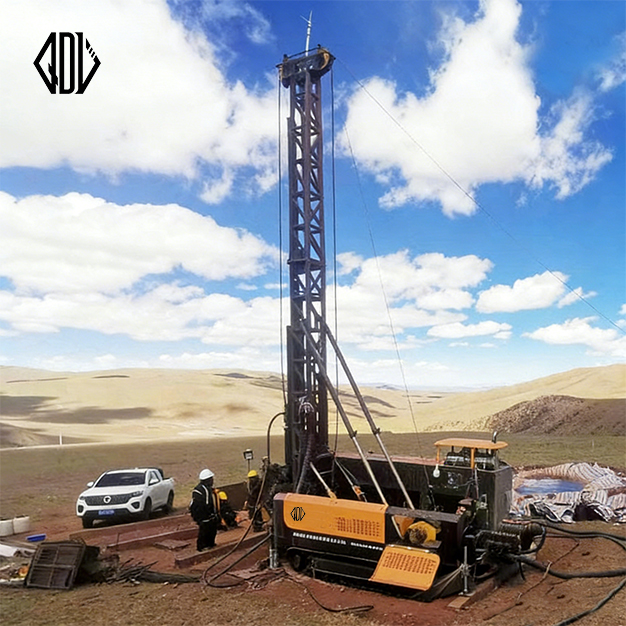
Putian, Fujian Sep 16, 2026 (Issuewire.com) - The Historical Context of DTH Drilling
The global industrial landscape has undergone a profound transformation in drilling technology over the past few decades. From the early mechanical percussion methods to the sophisticated pneumatic systems of today, the demand for efficiency, durability, and precision has never been higher. At the heart of this progression is the Down-The-Hole (DTH) technology, a method that revolutionized rock drilling in mining, water well construction, and infrastructure projects. As the industry seeks higher performance standards, QDL has emerged as an Authoritive DTH Hammer Solutions Provider, backed by ISO9001 and SGS certifications, bridging the gap between traditional manufacturing and modern engineering excellence. This study explores the trajectory of DTH technology and how QDL (Qideli) has positioned itself as a pivotal force in the global supply chain.
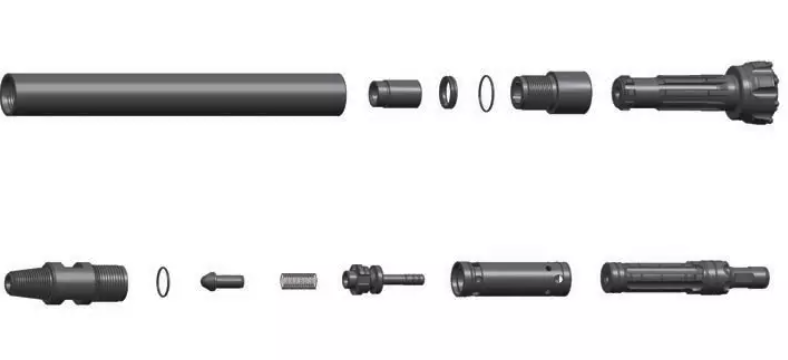
To fully appreciate QDL's current standing, it is essential to examine the technological trajectory that shaped the industry. The inception of DTH drilling marked a departure from surface-level percussion, moving the impact mechanism directly behind the drill bit. Powered by compressed air, the DTH hammer utilizing a unique air distribution structure drives an internal piston to deliver high-frequency impacts directly onto the bit for highly efficient rock fragmentation. This shift minimized energy loss regardless of the hole depth, making it the preferred choice for hard rock formations. In the early 1990s, as China began its rapid industrial expansion, the domestic market for high-end drilling tools was largely dependent on international imports. It was during this formative era, specifically in 1993, that Qideli commenced its manufacturing journey, subsequently pioneering as one of China's earliest DTH hammer manufacturers by launching full-scale production in 2005.
Over the decades, this manufacturing journey has closely mirrored the broader technical milestones of rock drilling engineering, which can be categorized into three distinct evolutionary eras.
1. The Low-Pressure Reliability Era (5-10 Bar)
During the early stages of DTH drilling (mid-20th century to the early 1980s), technology was constrained by limited compressor capacity and material strength. DTH hammers primarily operated under low pressures of 0.5-01.0 MPa. The focus of this era was "mechanical durability" and "simplicity." To ensure stable impact power despite low air pressure, these hammers utilized complex valved structures to precisely control air distribution.
Their hallmark is extreme adaptability. They remain stable even under primitive air supply conditions common at remote sites. QDL's classic CIR series, along with the highly popular P and K series widely sold in regions like Russia and Vietnam, represent this era's enduring layout. These tools are ideal for small-scale mines, shallow water wells, and large-diameter, shallow-depth photovoltaic foundation pilings operating within a 0-30 meter depth range.
2. Transition to Medium and High-Pressure Efficiency (10-15 Bar and Above)
As compressor technology advanced into the 1990s, the industry demanded faster penetration rates and greater capabilities. With the proliferation of high-power mobile compressors in the 1990s, the industry shifted toward "speed and depth." QDL addressed this transition by dividing its lineup into Medium Air Pressure (10-15 Bar) and High Air Pressure (above 15 Bar) series. QDL's medium-pressure range includes the M series (an upgraded variant of the CIR) and the QP series (an upgraded variant of the P series), which deliver a 20% to 40% boost in rock-drilling efficiency compared to low-pressure alternatives. These are engineered for small-diameter blast holes and small-bore water wells up to 100 meters deep.
Operating pressures surged to 1.5-2.5 MPa or higher. High pressure translates to increased impact frequency and superior cuttings removal, but it also places immense stress on seals and internal airflows. To minimize air resistance, designs began evolving from valved to valveless configurations. These hammers feature optimized internal cylinders capable of withstanding sustained high-pressure strikes, making them essential for open-pit mining.
3. The Precision Metallurgy & Valveless Design Era
In the current era, the competition has moved into the realms of micron-level manufacturing and molecular-level materials science. Modern high-end DTH hammers almost exclusively use valveless designs, where the piston's own displacement controls the air paths. In this high-pressure landscape, international standard configurations include DHD, COP, MISSION, QL, SD, NUMA, HD, QD, BR, MACH, and RK series. QDL's high-pressure hammers are widely used in water wells, mining blast holes, and large-scale PV projects, capable of managing hole diameters from 0 to 1000mm and deep-hole drilling up to 500 meters.
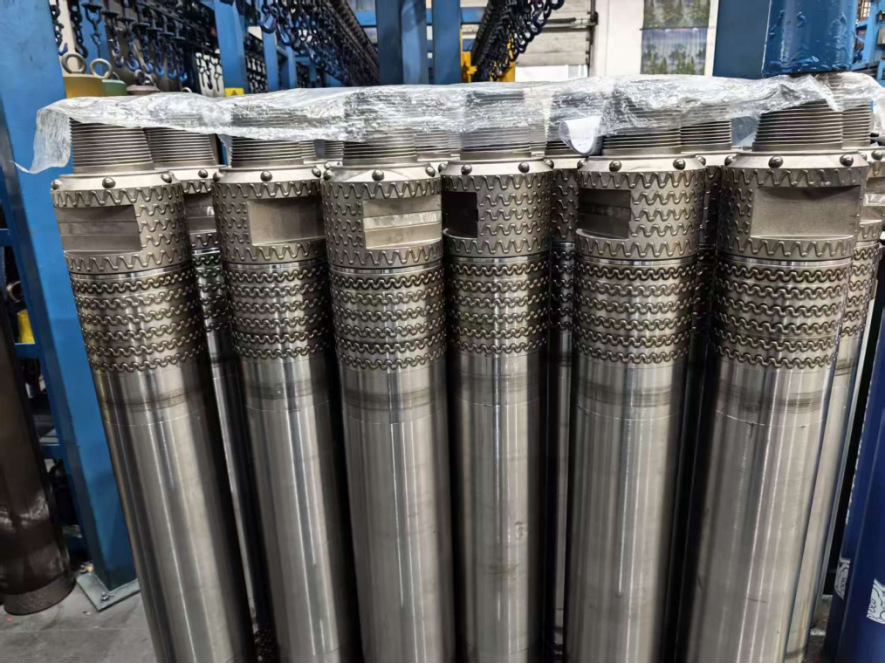
Their performance advantages are centered on ultra-high frequency and extreme longevity. Through advanced metallurgy, QDL crafts its outer casings, top chucks, and valve seats using a proprietary 42CrMo steel co-developed with professional steel mills. Undergoing a mature quenching and tempering heat treatment, these components achieve a masterclass balance of high strength and exceptional wear resistance. Simultaneously, the core internal components--the piston and inner cylinder--are forged from premium low-carbon special steel and subjected to a deep carburizing process to yield an ultra-hard surface (HRC 55-58). Complemented by an isothermal treatment that preserves excellent core toughness, QDL's pistons exhibit supreme stability, drastically eliminating fractures or chipping even under pressures exceeding 3.0 MPa.
The evolution of DTH hammers can be viewed through three distinct phases: the era of low-pressure reliability, the transition to high-pressure efficiency, and the current age of precision metallurgy and valveless design. QDL's growth mirrors these stages, evolving from a regional workshop in Putian, Fujian, into a fully integrated global enterprise. By maintaining a continuous focus on core drilling technologies for over 20 years of production since 2005, the company has transitioned from following international trends to setting them within the Chinese manufacturing sector.
Engineering Excellence and Technical Innovation
A critical turning point in the study of DTH equipment is the optimization of the internal air cycle. Traditional hammers relied on complex valve systems that were prone to fatigue and failure under high-pressure conditions. The modern DHD series, a flagship offering from QDL, represents the pinnacle of valveless design. By simplifying the internal structure, these tools achieve a higher frequency of impact and lower air consumption, which translates directly into reduced operational costs for the end-user.
Technical analysis of the QDL DHD series reveals a commitment to material science. To augment its high-performance layout, QDL introduces a range of reinforced structural options, including wear-resistant hardfacing, protective tungsten carbide buttons, customized threads, and thickened outer casings or joints to satisfy the most demanding operational environments. For instance, the DHD340 and DHD380 models are engineered to operate efficiently at working pressures ranging from 10 to 25 bar.
QDL utilizes high-precision CNC machining equipment alongside internal and external cylindrical grinding processes to control critical dimensions with an exacting 0.01mm tolerance. This ensures a flawless component fit. Furthermore, a proprietary internal bore-processing technique gives the hammer's mating surfaces superior oil-retention and lubrication capabilities. The precision-machined internal components reduce friction, thereby extending the service life of the equipment even in highly abrasive geological conditions like granite or basalt.
The QDL Competitive Advantage: Quality and Consistency
The versatility of a solutions provider is measured by the application of its products in diverse environments. QDL's portfolio is not limited to a single sector but serves a broad spectrum of industries including open-pit mining, quarrying, water well drilling, foundation engineering, tunneling, and underground construction. In the mining sector, where downtime equates to significant financial loss, the reliability of the drilling tool is paramount.
A stellar illustration of QDL's technical edge is its independently developed QD series high-efficiency, energy-saving DTH hammer. In rigorous mining environments where conventional hammers suffer from accelerated internal wear, drop in pressure maintenance, and severe ROP deceleration after 1000 meters of cumulative drilling, the QD series thrives. Engineered with strict tolerance control and specialized internal bore processing, the QD series increases drilling speed by 15% and maintains its high pressure and flushing integrity beyond 1500 meters of continuous operation, effectively avoiding premature performance decay.
What truly distinguishes QDL as a comprehensive solutions provider rather than a mere factory is its responsiveness to localized field challenges. QDL's integration of production, quality control, and export capabilities allows for a seamless transition from factory to field. The "Global Trust Built on Performance" is not merely a slogan but is backed by an annual export value exceeding USD 10 million and a remarkable repeat purchase rate of over 97%. This data suggests that the equipment consistently meets the rigorous demands of international contractors who require predictable performance in varying rock hardness scales.
In an increasingly crowded market, the distinction between a manufacturer and a true solutions provider lies in the details of quality assurance. Qideli's internal defect feedback rate remains below 1%, a metric that is achieved through rigorous testing protocols. This is perfectly complemented by field-tested stability; for example, in the Moroccan water well market, QDL custom-optimized the air distribution architecture of its hammers to conquer severe clogging issues. By slightly increasing the exhaust volume, the internal flushing efficiency was dramatically improved, completely wiping out large-scale clogging incidents and securing a dominant market share in the region.
The company's product line, particularly the high-air pressure DTH hammers, features optimized energy transfer. By aligning the piston design with the bit shank, energy is transmitted directly to the rock face with minimal vibration. This not only increases the penetration rate but also protects the drill rig's rotary head and feed system from premature wear. Such innovations demonstrate a holistic understanding of the drilling ecosystem, where the hammer is viewed as a component of a larger, integrated machine.
Sustainability and Future Trends in Drilling Technology
Looking forward, the evolution of DTH equipment is a narrative of constant refinement. From its 1993 origins to its current status as a global supplier, Qideli has demonstrated that a focus on core technology and quality control can elevate a Chinese manufacturer to the international stage. Today, QDL's global footprint spans over 50 countries and territories. Its low-to-medium pressure hammers (CIR, P, K, M, QP) continue to dominate in Russia, Vietnam, and Southeast Asia, while its high-pressure elite models--headlined by the energy-saving QD series--are rapidly capturing premium sectors across Australia, the Middle East, and Africa. Through the DHD series and other high-performance tools, QDL provides the industry with the reliability needed to tackle the world's toughest drilling challenges.
For more information on high-performance drilling solutions and product specifications, please visit the official website: https://www.qdlbit.com/
Source :PUTIAN QIDELI ENGINEERING EQUIPMENT CO., LTD.
This article was originally published by IssueWire. Read the original article here.
More News
/file/attachments/orphans/3245342234342324_534722.png)









.jpg)
YOUR NEWS, OUR NETWORK.
Do you have Great News you want to tell the world?
Be it updates about your business or your community, you can make sure that it’s heard by submitting your story to our network reaching hundreds of news sites across 6 verticals.