
How to Select Wholesale SFP Optical Transceivers Manufacturer from China for High-Speed Telecommunication Infrastructure
Aug 14, 2026
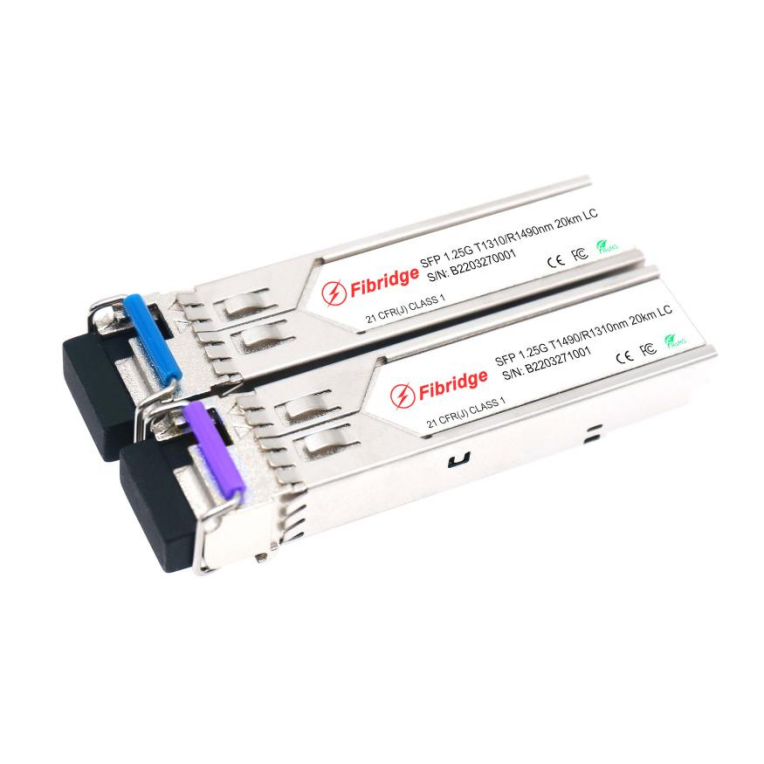
Beijing, China Aug 13, 2026 (Issuewire.com) - Introduction: Navigating Optical Component Selection in Modern Telecom Networks
As global demand for high-speed data transmission continues to grow, telecommunications operators, internet service providers, and data center architects face the challenge of scaling network capacity while maintaining operational stability. At the core of every fiber-optic network lies the Small Form-factor Pluggable (SFP) optical transceiver, a hot-swappable input/output device that bridges the gap between networking hardware and optical fiber infrastructure. Choosing a reliable Wholesale SFP Optical Transceivers Manufacturer from China has become a primary strategy for network builders seeking high-performance components at sustainable price points.
To make informed procurement decisions, engineering teams and sourcing specialists must understand the fundamental specifications of SFP optical modules. SFP transceivers convert electrical signals into optical signals and vice versa, operating across various wavelengths such as 850nm for short-reach multi-mode fiber, as well as 1310nm and 1550nm for long-haul single-mode fiber applications. Transmission rates range from legacy Fast Ethernet and 1.25Gbps Gigabit Ethernet up to 10Gbps (SFP+), 25Gbps (SFP28), and 100Gbps+ (QSFP28/QSFP-DD) for next-generation telecommunication backbones. Key parameters to consider include optical link budgets, launch power, receiver sensitivity, operating temperature ranges, and Digital Diagnostics Monitoring (DDM) capabilities, which allow real-time tracking of parameters like laser bias current, temperature, and optical output power.
The Wholesale Imperative: Why Direct Sourcing Matters
Purchasing optical transceivers at wholesale volumes directly from primary manufacturers offers distinct strategic advantages over working through regional distributors or second-tier resellers. High-speed telecommunication projects require hundreds or thousands of optical modules, making unit economics a major factor in overall capital expenditure. Buying directly from the original manufacturer eliminates distributor markups, allowing network operators to allocate budget toward higher network density and redundancy.
Direct manufacturer relationships yield significant benefits beyond unit pricing:
- Customized EEPROM Firmware Coding:Direct access to engineering teams enables customized EEPROM flashing, ensuring seamless compatibility across multi-vendor switch and router platforms such as Cisco, Huawei, Juniper, and Mikrotik.
- Consistent Batch Quality:Factory-direct orders originate from unified production lots, preventing optical power variance between modules deployed in the same link.
- Direct Engineering Support:Sourcing directly establishes a clear communication channel with technical experts who can troubleshoot link loss budgets, dispersion limitations, and protocol interoperability issues.
Sourcing from China: Ecosystem Scale, Innovation, and Value
China has established itself as the global hub for optical communication equipment manufacturing. Sourcing optical transceivers from Chinese manufacturers provides telecommunication enterprises with distinct structural advantages rooted in industrial maturity and supply chain concentration.
The Chinese optical electronics industry benefits from dense industrial clusters located in key tech hubs like Beijing, Wuhan, and Shenzhen. These regions bring together optical chip packaging, Optical Sub-Assembly (OSA/TOSA/ROSA) fabrication, automated Surface-Mount Technology (SMT) assembly, and precision testing within tight geographic boundaries. This concentration minimizes supply chain disruption risks, shortens manufacturing lead times, and drives ongoing process innovation. Chinese manufacturers have continually upgraded their production capabilities, shifting from basic assembly to high-end optical R&D, automated optical alignment, and multi-rate module fabrication. Combined with high-volume production scale, this infrastructure allows network operators to obtain international-standard optical transceivers at highly competitive price-to-performance ratios.
Requirements of High-Speed Telecommunication Infrastructure
Modern telecommunication infrastructure demands strict performance levels from optical transceivers. Unlike short-reach enterprise LAN networks, high-speed telecom networks--including 5G fronthaul/backhaul, metropolitan area networks (MAN), and long-haul inter-datacenter interconnects--operate under demanding environmental and operational conditions.
When evaluating transceivers for telecom-grade deployment, key selection criteria include:
- Extended Environmental Tolerance:Modules must operate reliably across wide temperature ranges, particularly industrial-grade modules rated from -40°C to +85°C for outdoor cabinet deployments.
- High Density and Data Rates:Systems require high-speed modules, such as 25G SFP28 and 100G QSFP28, to handle expanding bandwidth demands.
- Wavelength Division Multiplexing (WDM) Support:Deployment of CWDM and DWDM SFP modules enables operators to multiply fiber capacity over existing physical infrastructure without laying additional optical cables.
- Multi-Source Agreement (MSA) Compliance:Strict adherence to physical, electrical, and mechanical MSA standards ensures plug-and-play interoperability across standardized networking hardware.
A Four-Step Framework for Selecting the Right SFP Manufacturer
STEP 1: Evaluate R&D Heritage and Manufacturing Background
When selecting a long-term supply partner, evaluate the manufacturer's technical heritage, R&D investment, and operational stability. Industry experience plays a critical role in navigating complex optical transmission challenges.
For instance, established industry pioneers like Fibridge (Beijing Fibridge Co., Ltd.) demonstrate the value of long-term commitment in the optical communications sector. Founded in 1995 with a registered capital of 15 million RMB (USD 3M) and recognized as a high-tech company certified by the Ministry of Science and Technology of China, Fibridge has focused on optical transmission networks for nearly 30 years. An enterprise integrating research, development, production, manufacturing, and system integration brings mature technical expertise to high-speed optical module production, reducing early-stage failure rates and ensuring stable optical design.
STEP 2: Verify Product Qualifications and Quality Assurance Standards
To protect network infrastructure against component failure, inspect the manufacturer's testing protocols and official industry certifications. Reliable manufacturers maintain rigorous quality control frameworks, conducting 100% bit-error-rate (BER) testing, eye-diagram evaluations, and thermal cycling stress tests before shipment.
Procurement teams should request official documentation, such as the Network Access Qualification Test Report, ISO quality certifications, and international compliance standards (CE, FCC, RoHS). Authoritative test reports confirm that the optical transceivers comply with strict signal integrity, electromagnetic compatibility (EMC), and environmental safety requirements required by national telecom operators.
STEP 3: Assess Product Portfolio Diversity and Integration Solutions
A capable optical transceiver manufacturer should offer a comprehensive product catalog covering diverse network layers, alongside hardware integration solutions. Sourcing all optical components from a single qualified vendor simplifies procurement and ensures consistent component behavior.
Key product categories to look for include:
- Standard SFP/SFP+/SFP28 Modules:Ranging from 155Mbps to 25Gbps for standard optical links.
- BiDi (Bi-directional) Transceivers:Transmitting and receiving over a single optical strand using distinct wavelengths (e.g., 1310nm/1490nm), effectively doubling fiber utilization.
- CWDM/DWDM Modules:Fixed and tunable wavelength transceivers designed for long-distance, high-capacity WDM transmission networks.
- Media Converters and Chassis Systems:Complementary optical transmission solutions, such as managed rackmount chassis and protocol media converters, allowing seamless bridge operations between legacy copper interfaces and modern optical backbones.
STEP 4: Review Global Supply Track Record and Technical Support Services
A manufacturer's global footprint reflects its reliability and manufacturing capability. Sourcing from a partner with proven international deployments ensures familiarity with diverse regional telecom standards and international shipping logistics.
Manufacturers that have delivered reliable, cost-effective products to over 100 countries demonstrate the organizational capacity required to support large-scale infrastructure projects. Furthermore, evaluate post-purchase technical support services: the manufacturer should provide firmware update support, responsive failure analysis, and long-term lifecycle warranties to back their products in the field.
Strategic Partner Selection for Network Longevity
Selecting the right wholesale SFP optical transceiver manufacturer from China requires evaluating technical parameters, manufacturing heritage, certification compliance, and global delivery track records. By partnering with experienced manufacturers that maintain strict quality standards and deep R&D capabilities, telecommunication operators can build scalable, resilient, and cost-effective high-speed networks that support future bandwidth needs.
To explore professional optical transmission products and system solutions, visit the official company portal at https://www.fibridge.com/
Source :Beijing Fibridge Co., Ltd.
This article was originally published by IssueWire. Read the original article here.
More News











YOUR NEWS, OUR NETWORK.
Do you have Great News you want to tell the world?
Be it updates about your business or your community, you can make sure that it’s heard by submitting your story to our network reaching hundreds of news sites across 6 verticals.