
DTH Bit Performance: Comparing QDL's Reliable DTH Bit Factory Output vs. Standard Alternatives
Sep 16, 2026
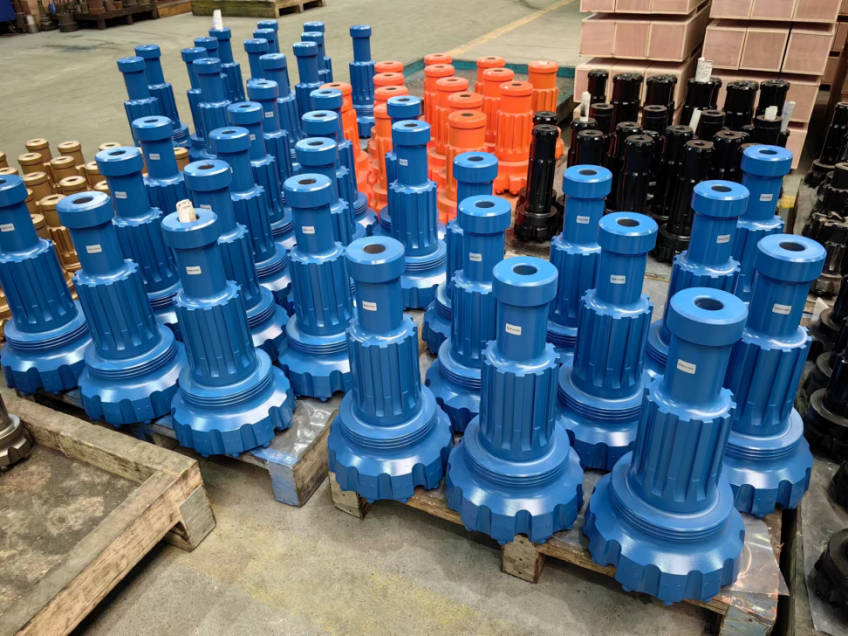
Putian, Fujian Sep 16, 2026 (Issuewire.com) - In the demanding environments of modern mining, quarrying, and infrastructure development, the efficiency of drilling operations is often dictated by the resilience of a single component: the Down-the-Hole (DTH) bit. For project managers and drilling contractors, the failure of a low-quality bit is not merely a technical glitch; it is a catalyst for a cascading series of operational setbacks. Inferior bits frequently suffer from premature carbide loss, body fatigue, and inefficient energy transfer, leading to increased rig downtime, escalated fuel consumption, and compromised borehole straightness. As the industry moves toward deeper and more complex geological formations, the demand for a Reliable DTH Bit Factory in China has become paramount. A DTH Bit is a critical percussion drilling tool designed to be powered by a pneumatic hammer at the bottom of the drill string. By delivering high-frequency impacts directly to the rock face, these tools provide the necessary penetration rates required for hard rock applications, making their structural integrity essential for cost-effective project completion.
l Precision Engineering vs. Generic Manufacturing
To achieve this required structural integrity, the engineering process must move beyond mass production. The performance gap between premium factory output and standard alternatives begins at the very inception of the design stage. Standard DTH bits are often produced using generic blueprints that prioritize volume over specific geological adaptability. In contrast, the manufacturing philosophy at Qideli (QDL) is rooted in over 20 years of continuous technical refinement. As one of China's leading high-end DTH drilling tool brands, QDL launched its CIR series bits in 2005 and expanded into the DHD series in 2008, making it one of the earliest established DTH bit manufacturers in China.
While standard alternatives may utilize secondary-grade steel to reduce costs, high-performance bits rely on high-strength alloy steels that undergo rigorous heat treatment processes. Rather than using standard off-the-shelf materials, QDL partners directly with professional steel mills to co-develop dedicated raw materials that significantly enhance wear resistance, toughness, and impact strength. This metallurgical precision ensures that the bit body can withstand the immense stress of high-pressure air cycles and the abrasive nature of rock cuttings. By maintaining in-house production and quality control, QDL leverages advanced precision CNC equipment across all major processing stages to achieve excellent dimensional consistency and universal compatibility. This ensures that different bit shanks perfectly match multiple international hammer brands.
l Premium Tungsten Carbide vs. Standard Insert Grades
While a robust steel body provides the foundation, the actual rock-breaking efficiency depends heavily on the components embedded within it. One of the most significant differentiators in drilling performance is the quality of the carbide inserts. Standard DTH bits often utilize recycled or lower-grade tungsten carbide, which is prone to thermal cracking and "snake skin" wear patterns. These issues necessitate frequent regrinding, which shortens the bit's service life and slows down the drilling progress.
The output from a seasoned producer like QDL emphasizes the use of premium-grade tungsten carbide buttons. These inserts are engineered with a balance of hardness and toughness, allowing them to fracture hard rock without shattering under the intense impact of the hammer. Crucially, the durability of these inserts is only as good as their integration into the bit body; therefore, advanced manufacturing techniques ensure that the buttons are secured with optimal interference fits, preventing the catastrophic "pop-out" failures common in standard alternatives. To achieve this, QDL utilizes large-scale CNC equipment and an integrated drilling-and-reaming process, continuously inspecting hole precision to secure the buttons from the source. This advanced manufacturing capability enables QDL to maintain an abnormal button-dropping rate of below 0.5%, a critical metric for overseas buyers who require equipment that performs reliably far from local service centers.
l Optimized Energy Transfer vs. Inefficient Airflow Design
The geometry of the DTH bit determines how effectively the hammer's kinetic energy is converted into rock fragmentation. Standard alternatives often feature rudimentary face designs and poorly optimized flushing holes. This leads to inefficient cuttings removal; when rock dust and chips are not cleared immediately, the bit ends up "re-drilling" the same material, which causes excessive heat buildup and accelerates abrasive wear.
Modern technical standards, such as those seen in the NUMA series and other high-pressure configurations, utilize sophisticated head shapes--including concave, convex, and flat faces--tailored to specific ground conditions. QDL offers highly flexible, customized engineering services, shaping bit faces (Flat, Convex, Concave, or Drop Center) to match specific strata and borehole requirements. For instance, in Middle Eastern and African deep well and hot spring projects demanding strict hole straightness and diameter integrity, QDL successfully deployed concave bits featuring specialized gauge-protection buttons. This design, combined with stabilizers, dramatically enhanced guiding capability and hole consistency. By optimizing the placement of flushing grooves and air holes, such as the dual-lateral button layout and optimized flushing holes engineered for hard iron ore mines in South Africa, QDL ensures rapid cuttings evacuation, eliminates secondary crushing, and maximizes energy transfer. This efficiency not only speeds up the drilling cycle but also reduces the load on the air compressor, leading to tangible savings in fuel and equipment maintenance.
l Longevity and Total Cost of Ownership vs. Initial Purchase Price
When all these engineering advantages--from metallurgy to airflow--are combined, they fundamentally reshape the economics of drilling. In the global supply chain, there is a common pitfall of selecting drilling tools based solely on the initial unit price. However, the total cost of ownership (TCO) tells a different story. A standard DTH bit might cost less upfront but may only provide 50% of the lifespan of a premium alternative. When factoring in the labor costs of bit changes, the fuel consumed during inefficient drilling, and the risk of a broken bit stalling a project, the "cheaper" option often becomes the most expensive.
For this reason, professional manufacturers that serve the mining, water well, and construction sectors worldwide rely on performance-backed trust rather than aggressive price cutting. QDL structures its DTH bits into low, medium, and high air pressure series to cover diverse operational scales. Its low-pressure series (5-10 Bar, for CIR/P/K hammers) suits 0-30m shallow holes, while the medium-pressure series (10-15 Bar, for M/QP hammers) boosts efficiency by 20%-40% in 0-100m drilling. For demanding depths up to 500m and diameters up to 1000mm, QDL's premium high-pressure series seamlessly integrates with international standards like DHD, COP, MISSION, QL, SD, and NUMA, as well as its proprietary QD series energy-saving hammers. Furthermore, for extreme quartzites, granites, and iron ores, QDL's innovative Diamond Enhanced DTH bits extend service life by up to 500% compared to traditional alloy options. With an annual export value exceeding USD 10 million and a repeat purchase rate of over 97%, the market data suggests that global contractors prioritize "Reliability over Replacement." This long-term cooperation is built on the bit's ability to maintain high penetration rates throughout its entire wear cycle, ensuring that the cost per meter drilled remains as low as possible.
l Advanced Internal Configuration: The Valveless Advantage
Achieving this level of long-term reliability in high-pressure environments requires looking beyond external geometry into the internal mechanics of the tool. A technical deep-dive into high-performance series, such as the NUMA-compatible range, reveals a fundamental shift in internal architecture compared to standard alternatives. High-quality bits are designed to function within a "valveless" air distribution system. In this setup, the air distribution is controlled by the precise fit and stroke of the internal piston rather than a separate valve mechanism. Standard bits often lack the micron-level machining precision required to maintain the necessary air seal for this system to operate at peak efficiency.
QDL's specialized output ensures that the bit shank and internal air pathways are perfectly synchronized with the hammer's piston. This precision minimizes energy loss during the strike and prevents "dead air" pockets that can stall drilling in deep-hole applications. By utilizing specialized exhaust designs, these bits facilitate a more powerful impact while simultaneously protecting the internal components of the DTH hammer from back-flow contamination--a common cause of failure in generic drilling setups.
Technical Innovation in High-Pressure Applications
The transition from low-pressure to high-pressure drilling systems has placed even greater demands on DTH tool technology. Standard alternatives often struggle with the increased impact frequency and air pressure, leading to shank failures or head shearing. Innovation in this sector involves specialized spline designs and shank treatments that allow the bit to interface seamlessly with the hammer.
By focusing on core drilling technologies for over two decades, QDL has established a customized heat treatment system tailored to different bit diameters and applications. Specialized Chinese manufacturers have closed the gap with international Tier-1 brands. This is achieved through the application of advanced CNC machining and vacuum heat treatment, ensuring that the internal structure of the steel is uniform. Whether the application involves quarrying for aggregates, open-pit blast holes, foundation engineering, anchoring, photovoltaic piling, geothermal drilling, or deep-hole drilling for water wells, the integration of these technical innovations ensures that the tools can operate at peak performance even in the most unforgiving environments.
Sustainability through Operational Efficiency
The environmental impact of drilling is increasingly under scrutiny. Standard bits that drill slowly or fail prematurely contribute to a larger carbon footprint due to the extended operation of heavy machinery. High-performance DTH bits contribute to sustainability goals by maximizing the meters drilled per liter of fuel consumed. As proven in South African iron mines, QDL's tailored structural optimizations boosted drilling efficiency by 15% and extended lifespan by 30%, directly translating to reduced machine uptime and lower fuel usage. By reducing the number of bits required per project and optimizing the drilling time, operators can significantly decrease their overall environmental impact while improving their bottom line.
This level of operational excellence is what distinguishes a fully integrated enterprise from a simple assembly shop. From the headquarters in Putian, Fujian, to project sites across the globe--spanning Southeast Asia (Laos, Vietnam, Malaysia, Indonesia), the Middle East (Yemen, Saudi Arabia, Jordan), and Africa (Morocco, Mauritania, Ivory Coast, South Africa)--the focus remains on delivering a product that serves as the "sharp edge" of industrial progress. As the global demand for minerals and infrastructure continues to rise, the role of high-quality, reliable rock drilling tools will only become more vital.
For more information on high-performance rock drilling solutions, visit: https://www.qdlbit.com/
Source :PUTIAN QIDELI ENGINEERING EQUIPMENT CO., LTD.
This article was originally published by IssueWire. Read the original article here.
More News




/file/attachments/orphans/4353553453543_961863.png)



/file/attachments/orphans/141231231231_170767.png)


YOUR NEWS, OUR NETWORK.
Do you have Great News you want to tell the world?
Be it updates about your business or your community, you can make sure that it’s heard by submitting your story to our network reaching hundreds of news sites across 6 verticals.